



Phoenix Contact IIoT

Phoenix Contact provides Industrial Internet of Things (IIoT) solutions for infrastructure, remote access, Ethernet infrastructure, device connectivity, and power systems.
Infrastructure
Infrastructure is the foundation for building any IIoT network. Being able to use PCs and HMIs to bring all that data to one place helps users better understand and make changes where they are needed. Informational and operational devices are continuously sharing data – making sure a user's networking is secure is even more critical as more devices are connected.
- Network security (mGuard products)
- Interactive visualization (PCs and HMIs)
- Control devices
Infrastructure Products

Phoenix Contact FL mGuard 1102 & 1105 Security Routers
Protects industrial networks against IT attacks, users need only minimal network/security knowledge.

Phoenix Contact AIO69K Stainless-Steel PC Monitors
Capacitive widescreens with full HD resolution, and come in three sizes: 15.6”,17.3”, and 23.8”.
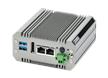
Phoenix Contact BL2 Box & Panel PCs
Robust, rugged solutions for industrial applications in demanding environments.

Phoenix Contact EMpro II Energy Meters
Features user-friendly functions that measure & send key energy parameters to cloud-based services.

Phoenix Contact North American Cordsets
Industry standard for robust and watertight quick-connect applications
Remote Access
When someone thinks of IIoT, remote access devices are probably what comes to mind first. Remote access has come a long way in the last decade and has afforded users multiple ways to monitor and access their network. Cellular, wireless, and cloud storage give users access while to all their devices wirelessly and can alert them of a problem when they are miles away.
- Wireless I/O
- Cloud access
- Cellular
Remote Access Products

Phoenix Contact Mobile TC Routers
Industrial 4G LTE routers enabling high-performance and high-speed data links via mobile networks.
Ethernet Infrastructure
Think of the Ethernet Infrastructure functional area as the high-speed highway that connects every aspect of a factory together. It’s crucial that all devices are able to communicate efficiently and quickly either by hardwire or through wireless network technology.
- Ethernet management (switches)
- Power over Ethernet (SPE, circulars, RJ45)
- Wireless Ethernet
Ethernet Infrastructure Products

Phoenix Contact Single Pair Ethernet (SPE) Connectors
Offer parallel, high-performance transmission of data and power via Ethernet through PoDL.
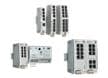
Phoenix Contact Ethernet Switches
Provides reliable, efficient data exchange and can ensure the robustness of networks.

Phoenix Contact CAT6A RJ45 Patch Cables
Pre-assembled, designed for CAT6A 10Gbps data rate Ethernet communication, IP20 protection.

Phoenix Contact Network Performance
Serves applications in copper and fiber optics, providing network connections with confidence.
Device Connectivity
The heart of a control cabinet is the logic platform. It has never been easier to build a smarter network to both monitor and control devices using common protocols such as Modbus, PROFINET, PROFIBUS, EtherCAT, and EtherNet/IP.
- Remote I/O
- Fieldbus
- Protocol converters
Device Connectivity Products

Phoenix Contact AXC F 2152 PLCnext Controller
Fast, robust, easy to use controller for the direct control of Axioline F I/Os.

Phoenix Contact Radioline I/O Extension Modules
Accommodates 4 NAMUR inputs that provide both status of the signal and quality of the signal line.

Phoenix Contact Stand-alone IP20 IO-Link Masters
Provides connectivity to IO-Link devices both inside and outside the control cabinet.

Phoenix Contact Modbus TCP/RTU to PROFINET Gateways
Allows different industrial protocols to work together in a single network.
Power Systems
Do not overlook power as it touches every aspect of an IIoT system. Power reliability involves protection against surge and overcurrent, conversion of AC to DC, monitoring systems, proper distribution, and battery backup.
- Surge protection
- Power supplies
- Relays and switches
Power Systems Products
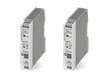
Phoenix Contact Power Supplies & UPS
A broad array of power products to meet basic, standard, and critical application needs.

Phoenix Contact PSR Switch
Non-contact RFID coded safety switch with compact design and integrated RFID transponder technology.

Phoenix Contact PSR-MC38 Safety Relay
Single and two-channel control with 2 enabling current paths and 1 digital signal output.
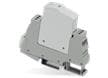
Phoenix Contact PLT-SEC Surge & Overcurrent Protectors
Offers ideal surge protection for power applications from 24VAC/DC to 230VAC/DC.

Phoenix Contact BOXTRAB Surge Protective Devices
Can combine protection for power, data, and signal within the same enclosure.

Phoenix Contact PTCB Circuit Breakers
Provide reliable protection against overload and short-circuit currents.