









MediaTek Genio 420, 520, & 720 Gen-AI IoT Platforms

MediaTek Genio 420, 520, and 720 Gen-AI IoT Platforms are pin-to-pin-compatible 6nm SoCs delivering 7.2 to 10 TOPS for advanced IoT applications. These three platforms feature an octa-core CPU including 2x Arm® Cortex®-A78 processors in the same package, pinout, and software stack. The genio 420 IoT platform delivers 7.2 TOPS and best-in-class 10 TOPS on the genio 520 and 720 through the Neural Processing Unit (NPU), CPU, and GPU. These three platforms support up to 16GB of LPDDR5X memory, making them well-suited to Large Language Models (LLMs). The 420, 520, and 720 IoT platforms can drive a 5K high-detail single display or dual active displays with 4K HEVC video decoding and encoding.
The Genio 420, 520, and 720 platforms support six FHD30 cameras with MIPI virtual channels and provide flexible high-speed I/O. These platforms offer robust connectivity with pre-integrated MediaTek Wi-Fi 6/6E solutions (Android only) and Wi-Fi® 6/6E, 7, and 5G RedCap modules. The Genio 420, 520, and 720 platforms support Android, Yocto Linux, and Ubuntu OS options. These IoT platforms feature an Open Standard Module (OSM) design and carry a long product life commitment with availability through 2035. Typical applications include industrial, commercial, smart homes, retail, healthcare, smart cities, and transportation.
Design Advantages
• One board, three performance points: Identical 13.8mm x 11.8mm VFBGA package and pinout across all three platforms, so a cost-driven variant, a volume unit, and a dual-camera flagship can share one carrier board
• One software baseline: Full software compatibility means moving between tiers is a configuration change, not a bring-up. Android and Yocto Linux BSPs and Ubuntu are supported today
• On-device Gen-AI without a discrete accelerator: The integrated 8th-generation MediaTek NPU hardware accelerates both CNN and transformer models, so quantized LLMs run locally - no accelerator card, no cloud round trip, no inference bill
• Latency and data residency: Inference happens in the SoC, so response time is bounded by the device, and camera or voice data never has to leave the product - frequently a requirement rather than a feature in access control, patient monitoring, and retail analytics
• Industrial interfaces as standard: Gigabit Ethernet MAC with TSN, PCIe Gen 2, 4x UART, 9x I2C, 6x SPI, and 4-lane MIPI-CSI/DSI on every platform, with an industrial temperature grade on the 520 and 720
• No bridge silicon for HMI or vision: GPU, display controller, video codecs, and ISP with 3A, noise reduction, AI face detection, lens shading correction, and warp engine are all on-die
• A 2035 supply horizon: A published 10-year lifecycle on each part, which matters more than a marginal benchmark advantage on programs that certify once and then ship for a decade
Features
- Highly efficient 6nm SoC family of Genio 420, Genio 520, and Genio 720
- Octa-core CPU including 2x Arm® Cortex®-A78 processors up to 2.6GHz
- Gen-AI capable, up to best-in-class 10 TOPS performance (NPU+CPU+GPU)
- Pin-to-pin and software compatible across all three platforms
- Up to 16GB of LPDDR5X memory, ideal for LLMs
- Up to 5K high-detail single display, or dual active displays
- 4K HEVC video decoding and encoding
- 6x FHD30 cameras with MIPI virtual channels
- Single or dual internal ISP, depending on platform
- Flexible high-speed I/O interfaces
- Pre-integrated MediaTek Wi-Fi® 6/6E solutions (Android only), with also Wi-Fi 6/6E, 7, and 5G RedCap module support
- Android, Yocto Linux, and Ubuntu OS options
- Open Standard Module (OSM) design support
- -40°C to +105°C wide temperature support on Genio 520 and Genio 720
- Arm® TrustZone®, secure boot to RSA-4096, crypto engine, and RNG
- Long product life commitment with availability through 2035+
Applications
- Industrial
- Human-Machine Interfaces (HMIs)
- Predictive maintenance systems
- Automated quality control and vision inspection
- Commercial:
- Advanced point-of-sale systems
- Digital advertising displays
- Customer service robots
- Smart homes:
- Advanced home automation systems
- Intelligent security cameras
- Smart appliances
- Retail:
- Interactive digital signage
- Smart kiosks
- Inventory management systems
- Healthcare:
- Patient monitoring
- Remote healthcare terminals
- Medical imaging displays
- Smart cities and transportation:
- Smart surveillance and access control
- EV charging and smart parking
- Environmental monitoring
Specifications
- TSMC 6nm process
- Memory and storage:
- Memory type and speed
- Up to 16GB memory
- LPDDR4X up to 4266Mbps
- LPDDR5X up to 6400Mbps
- UFS 3.1 2-lane, eMMC 5.1, SD 3.0, and SPI-NOR storage types
- Display and video:
- Single display up to ultrawide 5K60 or 4K60 and dual active display up to 2.5K60 + 2.5K60
- 1x MIPI-DSI (4-lane, 2.5Gbps/lane) or LVDS, 1x eDP 1.4 (4-lane), and 1x DP 1.4/eDP 1.2 (4-lane, shared with USB 3.2)
- 4K30 HEVC/H.264 video encoding
- 4K60 HEVC/H.264/VP9 video decoding
- JPEG decode 250MP/s and encode 400MP/s
- Camera:
- 2x MIPI-CSI (4-lane) supporting 6x FHD30 virtual channels
- ISP features 3A, noise reduction, AI face detection, lens shading correction, and warp engine
- Support for OpenGL ES 3.2, Vulkan 1.1, and OpenCL 2.2 graphics GPU
- Peripheral interfaces (I/O):
- 3x USB 2.0 (host), 1x USB 3.2 Gen-1 (host), and 1x USB 3.2 Gen-1 (host/device, shared with DP)
- 1x Gigabit Ethernet MAC with TSN and 1x PCIe Gen 2 (1-lane, root complex, and WoWLAN)
- 4x UART, 9x I2C, 6x SPI, and 3x PWM
- 2x I2S in, 2x I2S out, 2x PDM in, and 1x PCM in/out audio
- Wireless connectivity:
- Integrated Wi-Fi® 6 1x1/6E 2x2 (MT6631X / MT6637X), and BLUETOOTH® 5.3
- Wi-Fi 7, 5G, and 5G RedCap modules available
- Arm® TrustZone®, secure boot to RSA-4096, crypto engine, and hardware RNG security
- VFBGA 13.8mm x 11.8mm x 0.9mm, 0.4mm ball pitch package
- Android and Yocto Linux are officially supported; Ubuntu on the roadmap operating systems
Genio Portfolio

Block Diagrams


Infographic

Videos
3rd Party Development Tools and SOMs

AMobile Solutions Genio 520 Evaluation Kit
A platform for smart homes, interactive retail, edge AI computing, and industrial IoT.
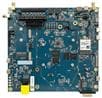
AMobile Solutions Genio 720 Evaluation Kit
A platform for smart homes, interactive retail, edge AI computing, and industrial IoT.

AMobile Solutions SoM-SD520 & SoM-SD720 Arm® System-on-Modules
Powered by MediaTek Genio G520/G720 processor and integrates Mali-G57 MC2 GPU and NPU850 AI engine.
Featured Processors

MediaTek Genio 420 GenAI Capable IoT Platform
For embedded applications that require reliable, low-power implementation of edge AI and GenAI.

Ezurio SONA™ MT320 Wi-Fi 6 & BLUETOOTH® 5.4 Modules
Industrial-grade Wi-Fi/BT modules based upon the MediaTek Filogic 320 Wi-Fi 6 chipset.

MediaTek Genio 720 High-Performance Gen-AI IoT Platform
Designed for advanced IoT applications, built on a highly efficient 6nm System-on-Chip (SoC).
Companion Modules

MediaTek Genio 520 Gen-AI IoT Platform
Delivers best-in-class 10 TOPS performance through the Neural Processing Unit (NPU), CPU, and GPU.
Genio Family

MediaTek Genio IoT Platform
Offers manufacturers innovation, accelerated market entry, and ten-plus years of longevity.