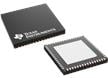

LMK5C33216ARGCR

Texas Instruments
595-LMK5C33216ARGCR
LMK5C33216ARGCR

Mfr.:

Description:
Clock Synthesizer/Jitter Cleaner Three DPLL three AP LL two-input and 16

ECAD Model:
Download the free Library Loader to convert this file for your ECAD Tool. Learn more about the ECAD Model.
This product may require additional documentation to export from the United States.

Availability

Stock:
Non-Stocked
Factory Lead Time:
18 Weeks Estimated factory production time.
Minimum: 2500   Multiples: 2500
Unit Price:
-,-- €
Ext. Price:
-,-- €
Est. Tariff:
This Product Ships FREE

Pricing (EUR)

Qty. Unit Price
Ext. Price
22,36 € 55.900,00 €

Product Attribute Attribute Value Select Attribute
Texas Instruments
Product Category: Clock Synthesizer/Jitter Cleaner
Delivery Restrictions:
 This product may require additional documentation to export from the United States.
RoHS:  
16 Output
1.25 GHz
CML, HSCL, LVCMOS, LVDS, LVPECL
Differential, Single-Ended
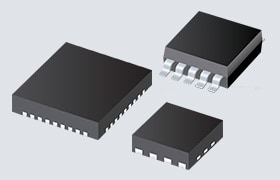
VQFN-64
200 MHz, 800 MHz
3.135 V
3.465 V
- 40 C
+ 105 C
LMK5C33216A
SMD/SMT
Brand: Texas Instruments
Moisture Sensitive: Yes
Operating Supply Current: 950 mA, 1.09 A, 1.205 A
Product: Synchronizers / Jitter Cleaners
Product Type: Clock Synthesizers / Jitter Cleaners
Factory Pack Quantity: 2500
Subcategory: Clock & Timer ICs
Type: High-Performance Network Synchronizer and Jitter Cleaner
Products found:
To show similar products, select at least one checkbox
Select at least one checkbox above to show similar products in this category.
Attributes selected: 0

This functionality requires JavaScript to be enabled.

USHTS:
8542390090
MXHTS:
8542399999
ECCN:
3A001.A.2.A

LMK5C33216A High-Performance Network Synchronizer

Texas Instruments LMK5C33216A High-Performance Network Synchronizer includes a jitter cleaner designed to meet stringent wireless communications and infrastructure application requirements. The network synchronizer integrates three DPLLs to provide hitless jitter and switching attenuation with programmable loop bandwidth and no external loop filters. This feature maximizes the flexibility and ease of use of the device. Each DPLL phase locks a paired APLL to a reference input.